by J.R. Smith
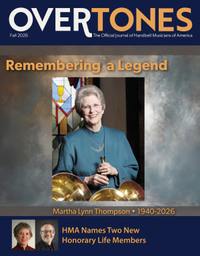
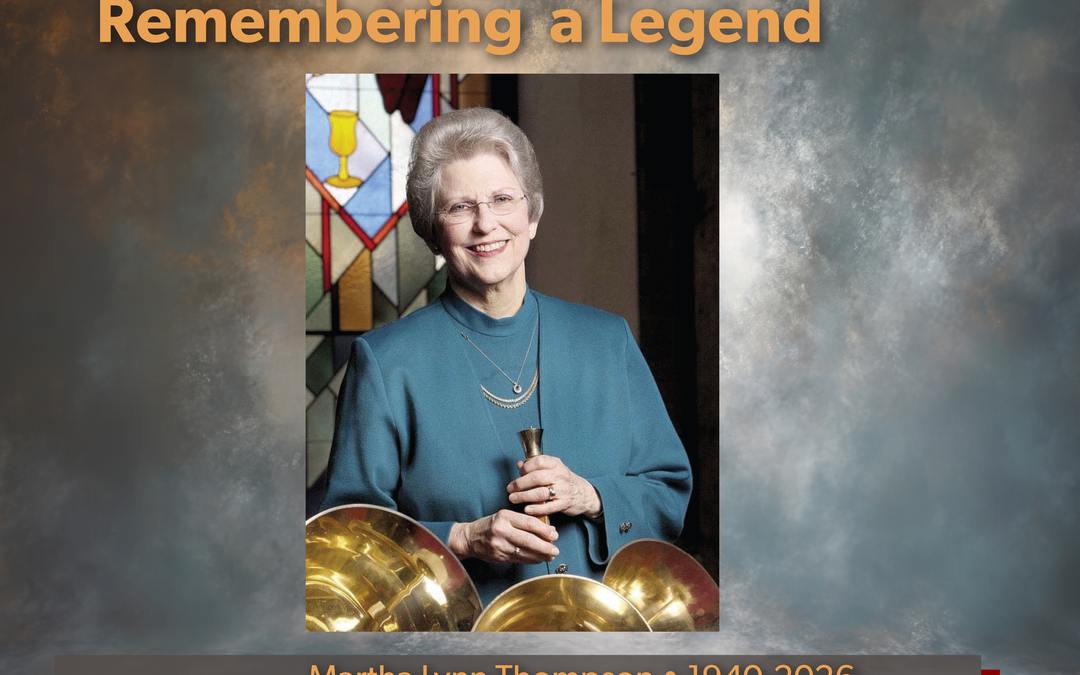
The handbell community is saddened that handbell composer, luminary, and HMA Honorary Life Member Martha Lynn Thompson has passed away.
There are certain names in the handbell world that seem to have always been there—printed across the top of a score, listed in a festival program, mentioned in a workshop, or passed from one generation of handbell musicians to the next. Martha Lynn Thompson was one of those names.
But Martha Lynn was far more than a familiar name on a piece of music. She was a church musician, educator, arranger, composer, mentor, engraver, innovator, and leader who helped shape the handbell art form during some of its most formative decades.
More importantly, she understood that handbells could do far more than make beautiful music. They could build confidence, create community, teach responsibility and teamwork, draw individuals into the life of a church, and give young people a place to belong.
With her passing, the handbell community lost one of its true pioneers.
Martha Lynn’s accomplishments were extraordinary. She wrote and arranged hundreds of works, served for decades in church music ministry, held national leadership positions in the American Guild of English Handbell Ringers, served on the Choristers Guild Board of Directors, and in 2001 was named an AGEHR Honorary Life Member, the highest honor bestowed by the organization now known as Handbell Musicians of America.
Yet those accomplishments alone do not quite explain Martha Lynn.
Looking back on her career in a 2006 Overtones interview, she said she had never thought of herself as a concert organist or recitalist. She was a church organist, and that was what she had wanted to be since high school. She preferred working behind the scenes and letting someone else occupy the spotlight.
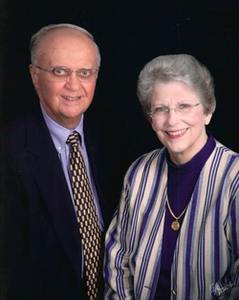
Martha Lynn and her late husband, Felix Thompson.
There is something wonderfully fitting about that. Martha Lynn spent much of her life avoiding the spotlight while quietly changing the handbell world from behind it.
She and Felix Thompson attended Henderson State University in Arkansas and both began their careers teaching junior high school choral music. In 1962, Felix became choir director at St. Paul United Methodist Church in Little Rock at the same time the church needed an organist. Martha Lynn was looking for an organist position, and the church hired her.
It was the beginning of a musical partnership that would last for decades.
That same year, the superintendent of the Methodist Children’s Home in Little Rock asked the young couple to develop a choir program for the children and youth who lived there. Before long, the Thompsons were preparing the children for television appearances and traveling to Methodist churches throughout Arkansas.
Then, in the mid-1960s, handbells entered their lives almost by accident.
Memorial gifts given to the Children’s Home were used to purchase a set of bells after Martha Lynn and Felix mentioned that they had heard handbells were “the coming thing.” There was only one problem: neither they nor the children really knew how to play them, and the superintendent wanted them performing in church within weeks.
So Martha Lynn did what she would continue doing throughout her career: she experimented, adapted, and figured things out.
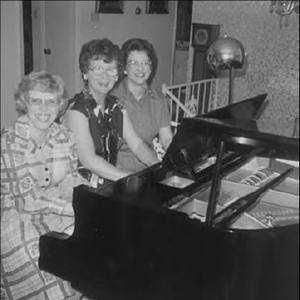
Martha Lynn, right, with longtime handbell and composer friends Betty Garee, center, and Fran Callahan.
Because some of the children could not read music, she and Felix began color-coding notes. Martha Lynn later joked that they ran out of colors before they ran out of notes—and that no one could see yellow very well anyway. The experiment nevertheless developed into a practical system that helped beginning musicians participate successfully.
In 1967, the youth ensemble attended the AGEHR National Festival in Dallas. Their repertoire was simple, Martha Lynn remembered, but they played it well. Then another director offered some constructive advice: they really needed to learn how to damp.
Martha Lynn laughed when telling the story years later. No one had ever told them. So they began damping. And they kept learning.
Those early experiences also shaped Martha Lynn’s philosophy of music education. The Children’s Home ensembles traveled more than 32,000 miles throughout Arkansas. The young musicians stayed with host families, learned how to conduct themselves as guests, and even learned how to write proper thank-you notes.
“They were learning more than just music,” Martha Lynn said.
That belief remained central throughout her career.
At St. James United Methodist Church in Little Rock, where Martha Lynn and Felix built a remarkable music ministry from the ground up, she saw handbells as a way to create relationships and a sense of belonging. Young musicians invited friends into the bell program, and some of those families eventually became part of the congregation. Martha Lynn described the rehearsal room as a place where young people knew the expectations, knew the rules would remain consistent, and knew they were safe.
She understood that excellence and welcome were not opposites.
The Thompsons expected their musicians to attend rehearsals, accept responsibility for their place in the ensemble, and rise to challenges. There was often a piece in the folder that was just a little harder than the ensemble thought it could play. Yet those expectations came with thoughtful teaching and support.
Martha Lynn’s arranging career developed in much the same practical way.
In the early years, there simply was not enough repertoire. One of the Thompsons’ ringers finally complained about hearing the same music repeatedly at festivals and asked, “Why can’t Mrs. Thompson write something for us?”
As it turned out, Mrs. Thompson could.
Felix later said their handbell program really began to take off when Martha Lynn began arranging music specifically for the ensemble.
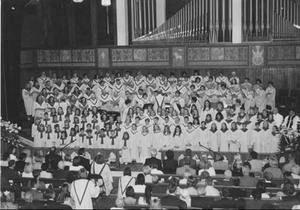
Musicians from the Thompsons’ music program at St. James United Methodist Church on Easter Sunday in 2000.
One early arrangement, “Parade of the Wooden Soldiers,” became a standard in handbell repertoire. Martha Lynn submitted it to AGEHR Publishing, who rejected it—and then later programmed it for massed ringing at a National Festival. She was paid $50 and received no royalties. Years later, she laughed that she had no idea how many copies had been sold.
Hundreds of publications followed, but Martha Lynn never seemed especially interested in publication for its own sake.
“I never write a piece because I want it to be published,” she said. If it was published, that was simply “a plus.” She wrote because one of her choirs needed something or because she heard music she thought would work beautifully on bells.
“This is not something I do to make money,” she said. “It’s something I do to share with others.”
That statement may say more about Martha Lynn Thompson than any list of her compositions ever could.
She wrote as someone who actually stood behind a handbell table. She understood how assignments worked, how a phrase felt in the hands, how to keep musicians engaged, and how to challenge an ensemble without discouraging it.
As her reputation grew, so did her influence. She served as national secretary of AGEHR and on the Choristers Guild Board of Directors, and she became widely respected as a teacher of notation, arranging, beginning ensembles, children’s choirs, techniques, and bell assignments.
Even retirement in 2002 did not really mean stopping. Martha Lynn continued directing adult bell choirs, arranging and composing, experimenting with music for smaller ensembles, engraving her own scores, and doing freelance engraving work for publishers.
She simply kept doing what she had always done—quietly creating opportunities for someone else to make music.
When someone such as Martha Lynn dies, it is tempting to measure the legacy in numbers: hundreds of publications, decades of ministry, choirs directed, festivals attended, musicians taught, honors received.
Those numbers tell us the scale of her contribution.
They do not fully explain its meaning.
The true measure of Martha Lynn Thompson’s legacy may be found in the young musician who gained confidence behind a handbell table, the teenager who found a safe place in a rehearsal room, the beginning musician who was given a way to participate, or the director who opened one of her scores and discovered that the arranger seemed to understand exactly what the musicians needed.
Martha Lynn once said she preferred working behind the scenes and allowing someone else to stand in the spotlight.
Perhaps that is why her influence became so enormous.
She devoted her life not to making sure the world noticed Martha Lynn Thompson, but to making it possible for others to make music.
She gave them notes to play, tools with which to learn, challenges she believed they could meet, and a place at the table.
And then she let them ring.
Her name will continue to appear on scores. Her teaching will live on through directors who learned from her. Her ideas will remain in rehearsal rooms, and her music will continue to sound in churches, concert halls, festivals, and communities around the world.
And each time it does, a little of Martha Lynn will still be there.
The handbell community is saddened that handbell composer, luminary, and HMA Honorary Life Member Martha Lynn Thompson has passed away.
There are certain names in the handbell world that seem to have always been there—printed across the top of a score, listed in a festival program, mentioned in a workshop, or passed from one generation of handbell musicians to the next. Martha Lynn Thompson was one of those names.
But Martha Lynn was far more than a familiar name on a piece of music. She was a church musician, educator, arranger, composer, mentor, engraver, innovator, and leader who helped shape the handbell art form during some of its most formative decades.
More importantly, she understood that handbells could do far more than make beautiful music. They could build confidence, create community, teach responsibility and teamwork, draw individuals into the life of a church, and give young people a place to belong.
With her passing, the handbell community lost one of its true pioneers.
Martha Lynn’s accomplishments were extraordinary. She wrote and arranged hundreds of works, served for decades in church music ministry, held national leadership positions in the American Guild of English Handbell Ringers, served on the Choristers Guild Board of Directors, and in 2001 was named an AGEHR Honorary Life Member, the highest honor bestowed by the organization now known as Handbell Musicians of America.
Yet those accomplishments alone do not quite explain Martha Lynn.
Looking back on her career in a 2006 Overtones interview, she said she had never thought of herself as a concert organist or recitalist. She was a church organist, and that was what she had wanted to be since high school. She preferred working behind the scenes and letting someone else occupy the spotlight.
Martha Lynn and her late husband, Felix Thompson.
There is something wonderfully fitting about that. Martha Lynn spent much of her life avoiding the spotlight while quietly changing the handbell world from behind it.
She and Felix Thompson attended Henderson State University in Arkansas and both began their careers teaching junior high school choral music. In 1962, Felix became choir director at St. Paul United Methodist Church in Little Rock at the same time the church needed an organist. Martha Lynn was looking for an organist position, and the church hired her.
It was the beginning of a musical partnership that would last for decades.
That same year, the superintendent of the Methodist Children’s Home in Little Rock asked the young couple to develop a choir program for the children and youth who lived there. Before long, the Thompsons were preparing the children for television appearances and traveling to Methodist churches throughout Arkansas.
Then, in the mid-1960s, handbells entered their lives almost by accident.
Memorial gifts given to the Children’s Home were used to purchase a set of bells after Martha Lynn and Felix mentioned that they had heard handbells were “the coming thing.” There was only one problem: neither they nor the children really knew how to play them, and the superintendent wanted them performing in church within weeks.
So Martha Lynn did what she would continue doing throughout her career: she experimented, adapted, and figured things out.
Martha Lynn, right, with longtime handbell and composer friends Betty Garee, center, and Fran Callahan.
Because some of the children could not read music, she and Felix began color-coding notes. Martha Lynn later joked that they ran out of colors before they ran out of notes—and that no one could see yellow very well anyway. The experiment nevertheless developed into a practical system that helped beginning musicians participate successfully.
In 1967, the youth ensemble attended the AGEHR National Festival in Dallas. Their repertoire was simple, Martha Lynn remembered, but they played it well. Then another director offered some constructive advice: they really needed to learn how to damp.
Martha Lynn laughed when telling the story years later. No one had ever told them. So they began damping. And they kept learning.
Those early experiences also shaped Martha Lynn’s philosophy of music education. The Children’s Home ensembles traveled more than 32,000 miles throughout Arkansas. The young musicians stayed with host families, learned how to conduct themselves as guests, and even learned how to write proper thank-you notes.
“They were learning more than just music,” Martha Lynn said.
That belief remained central throughout her career.
At St. James United Methodist Church in Little Rock, where Martha Lynn and Felix built a remarkable music ministry from the ground up, she saw handbells as a way to create relationships and a sense of belonging. Young musicians invited friends into the bell program, and some of those families eventually became part of the congregation. Martha Lynn described the rehearsal room as a place where young people knew the expectations, knew the rules would remain consistent, and knew they were safe.
She understood that excellence and welcome were not opposites.
The Thompsons expected their musicians to attend rehearsals, accept responsibility for their place in the ensemble, and rise to challenges. There was often a piece in the folder that was just a little harder than the ensemble thought it could play. Yet those expectations came with thoughtful teaching and support.
Martha Lynn’s arranging career developed in much the same practical way.
In the early years, there simply was not enough repertoire. One of the Thompsons’ ringers finally complained about hearing the same music repeatedly at festivals and asked, “Why can’t Mrs. Thompson write something for us?”
As it turned out, Mrs. Thompson could.
Felix later said their handbell program really began to take off when Martha Lynn began arranging music specifically for the ensemble.
Musicians from the Thompsons’ music program at St. James United Methodist Church on Easter Sunday in 2000.
One early arrangement, “Parade of the Wooden Soldiers,” became a standard in handbell repertoire. Martha Lynn submitted it to AGEHR Publishing, who rejected it—and then later programmed it for massed ringing at a National Festival. She was paid $50 and received no royalties. Years later, she laughed that she had no idea how many copies had been sold.
Hundreds of publications followed, but Martha Lynn never seemed especially interested in publication for its own sake.
“I never write a piece because I want it to be published,” she said. If it was published, that was simply “a plus.” She wrote because one of her choirs needed something or because she heard music she thought would work beautifully on bells.
“This is not something I do to make money,” she said. “It’s something I do to share with others.”
That statement may say more about Martha Lynn Thompson than any list of her compositions ever could.
She wrote as someone who actually stood behind a handbell table. She understood how assignments worked, how a phrase felt in the hands, how to keep musicians engaged, and how to challenge an ensemble without discouraging it.
As her reputation grew, so did her influence. She served as national secretary of AGEHR and on the Choristers Guild Board of Directors, and she became widely respected as a teacher of notation, arranging, beginning ensembles, children’s choirs, techniques, and bell assignments.
Even retirement in 2002 did not really mean stopping. Martha Lynn continued directing adult bell choirs, arranging and composing, experimenting with music for smaller ensembles, engraving her own scores, and doing freelance engraving work for publishers.
She simply kept doing what she had always done—quietly creating opportunities for someone else to make music.
When someone such as Martha Lynn dies, it is tempting to measure the legacy in numbers: hundreds of publications, decades of ministry, choirs directed, festivals attended, musicians taught, honors received.
Those numbers tell us the scale of her contribution.
They do not fully explain its meaning.
The true measure of Martha Lynn Thompson’s legacy may be found in the young musician who gained confidence behind a handbell table, the teenager who found a safe place in a rehearsal room, the beginning musician who was given a way to participate, or the director who opened one of her scores and discovered that the arranger seemed to understand exactly what the musicians needed.
Martha Lynn once said she preferred working behind the scenes and allowing someone else to stand in the spotlight.
Perhaps that is why her influence became so enormous.
She devoted her life not to making sure the world noticed Martha Lynn Thompson, but to making it possible for others to make music.
She gave them notes to play, tools with which to learn, challenges she believed they could meet, and a place at the table.
And then she let them ring.
Her name will continue to appear on scores. Her teaching will live on through directors who learned from her. Her ideas will remain in rehearsal rooms, and her music will continue to sound in churches, concert halls, festivals, and communities around the world.
And each time it does, a little of Martha Lynn will still be there.